
Find Everything You
Need To Rank Higher Online, Get More Customers and Make More Revenue


Let's Make Your Vision A
Reality
At ES Studios, we specialize in customizable promotional items designed to elevate your brand's visibility. With a wide range of products tailored for effective marketing campaigns, we empower businesses to make a lasting impression on their audience.
Our mission is simple: to provide innovative marketing solutions that meet and exceed our clients' needs. From branded apparel to tech gadgets, we offer a diverse selection of practical and memorable promotional items for every occasion.
Your Customizable Marketing Merchandiser
Elevate Your Brand and Leave a Lasting Impression with Personalized Promotional Solutions Tailored to Your Business Needs. Stand Out in the Market, Engage Your Audience, and Drive Results with Customizable Merchandise from BrandBoost.
Shop By Categories
Discover the perfect promotional items to elevate your brand and leave a lasting impression with our Shop by Category section. Whether you're looking for branded apparel, tech gadgets, office essentials, or eco-friendly products, we have everything you need to make a statement in your marketing campaigns.


What Client Our Says About Us

Company Name should look
for ones that are specific,
detailed, and highlight the
unique benefits of working with
the company.
Alex John Martin
Manager
Company Name should look
for ones that are specific,
detailed, and highlight the
unique benefits of working with
the company.
Alex John Martin
Manager
Company Name should look
for ones that are specific,
detailed, and highlight the
unique benefits of working with
the company.
Alex John Martin
Manager
Frequently Asked Question
Welcome to our FAQs section, where we address common questions and provide helpful answers about our services as a marketing merchandiser specializing in customizable promotional items. Whether you're new to promotional merchandise or a seasoned marketer looking to enhance your brand's visibility, our FAQs are here to provide clarity and guidance.

Can I customize the promotional items with my company logo?
Yes, we offer customization options to showcase your brand identity.
What types of promotional items do you offer?
We provide a diverse range of customizable merchandise for marketing.
What is the minimum order quantity for personalized items?
Minimum order quantities vary depending on the selected product.
How long does it take to receive my customized items?
Production times vary but are typically within 7-10 business days.
Do you offer rush shipping options for urgent orders?
Yes, we offer expedited shipping options for time-sensitive orders.
See Our Latest Blogs
Stay up-to-date with our latest insights, tips, and trends by diving into our newest blogs. Whether you're seeking industry expertise, marketing strategies, or product inspiration, our blog section is your go-to resource for valuable content.

Discover the Best Google Business Profile Comparison Tools
Google Business Profile Comparison Tools - Choose the Right GBP Management Platform for Local SEO
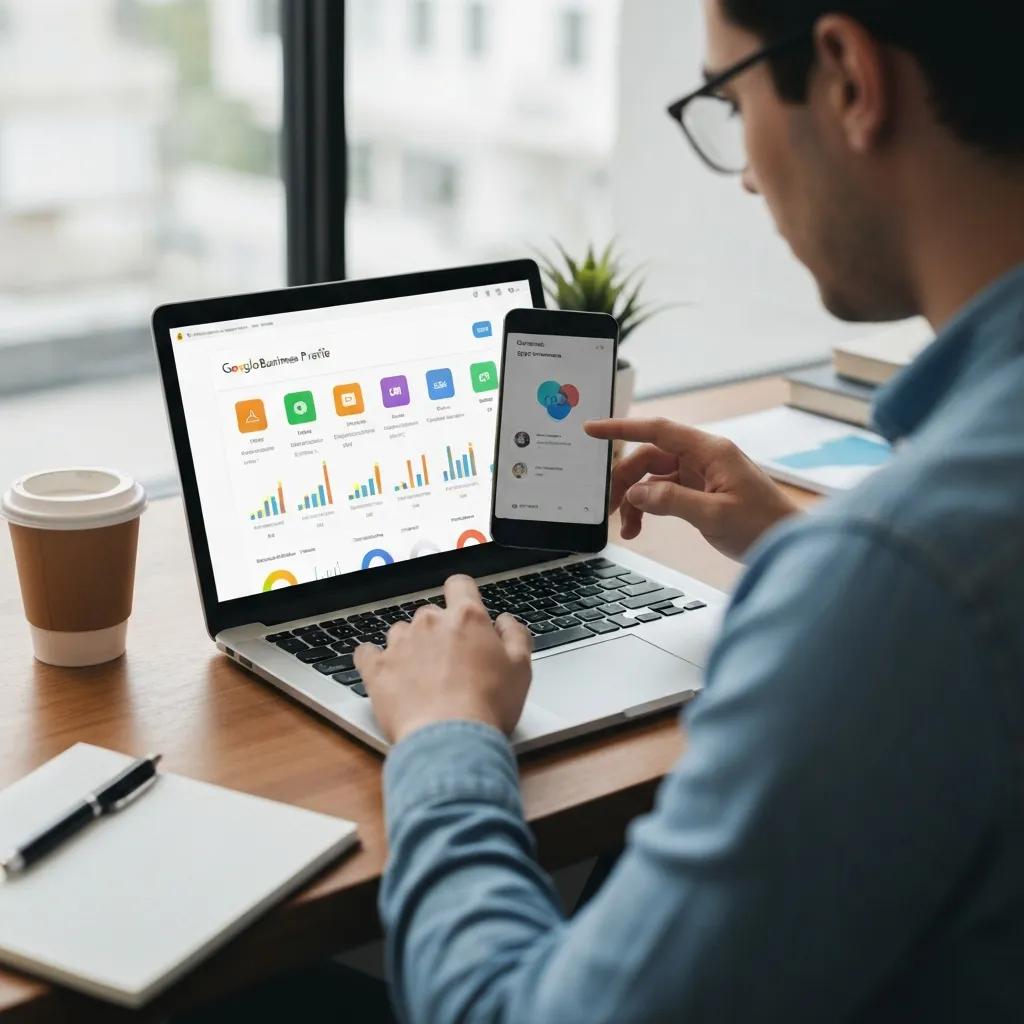
Google Business Profile comparison tools make it simple to evaluate, manage, and optimize your listings across Google Search and Maps. Instead of juggling individual profiles, these platforms centralize data, audit completeness, and surface the local ranking signals that matter. Manual GBP upkeep is slow and error-prone; comparison tools automate repetitive work, flag missing attributes, and benchmark performance against competitors. This guide explains how GBP comparison tools operate, why GBP management is essential for local SEO, which features to prioritize when evaluating vendors, and how to validate options with audits and short trials. You’ll get practical decision criteria for single-location businesses and multi-location agencies, a feature-level comparison to guide selection, and a step-by-step approach to run a low-friction pilot. We also reference AI-first automation and show a real-world example using an AI SEO agent so you can judge outcomes, not just promises. By the end, you’ll know which metrics to track, which tools fit specific needs, and how to test a solution with minimal risk.
What Are Google Business Profile Comparison Tools and How Do They Work?
GBP comparison tools are software platforms that centralize listing management, run audits, and compare performance across locations and competitors by aggregating GBP signals and applying automated workflows. They connect to your GBP accounts or the Google Business Profile API, pull attributes (categories, hours, photos), and create diagnostic reports that reveal inconsistencies and ranking opportunities.
The core flow is: ingest profile data - detect gaps and inconsistencies - recommend or apply fixes - monitor results. That loop shortens correction cycles and creates steadier local search signals. Most tools also offer ranking heatmaps, audit scores, and feature matrices that make vendor comparisons clear and actionable for decision makers. Knowing how these mechanics work helps you assess how a tool will cut manual effort and strengthen the profile signals that drive visibility.
What Features Define Effective GBP Management Tools?

Strong GBP tools blend automation, analytics, and workflow controls so listings move from inconsistent to optimized with minimal manual work. Capabilities that separate robust platforms from the rest include automated review monitoring and replies, scheduled Google Posts, image optimization and bulk media management, local ranking heatmaps, API syncs, and AI-driven content suggestions that improve over time.
These features boost visibility, engagement, and trust by keeping citations accurate, responses timely, and content fresh. When evaluating vendors, test feature maturity - manual - template-based - AI-driven - because AI-driven features tend to save more time while improving signal quality. The section below shows how comparison tools apply these features in practical optimization workflows.
- Audits and scorecards: summarize missing attributes and inconsistencies across listings.
- Scheduling and publishing: queue Google Posts and media uploads on a schedule.
- Review and Q&A monitoring: alert teams to new reviews and questions for fast replies.
Together, these capabilities create a continuous optimization loop that improves local ranking signals and customer interactions.
How Do Comparison Tools Help Optimize Your Google Business Profile?
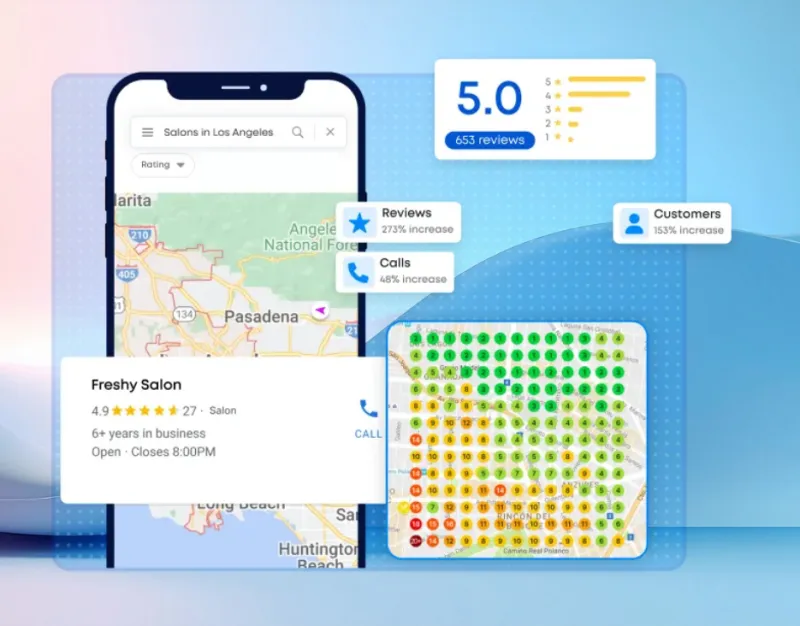
Comparison tools optimize Google Business Profiles by automating audits, enabling A/B testing of posts and images, and benchmarking performance versus competitors to focus effort where it pays. A typical workflow starts with an audit that identifies missing attributes, off-brand categories, and inconsistent NAP data; teams then apply fixes manually or through automated syncs. Tools with local ranking heatmaps show where profiles rank across a service area, which helps you prioritize locations and keywords. Integrated review management and scheduled posts keep profiles active and send freshness signals to Google. Together, these processes close the gap between best-practice GBP signals and the live profile, producing measurable lifts in views, clicks, and direction requests.
Why Is Google Business Profile Management Critical for Local SEO and Business Growth?
GBP management matters because core GBP signals - accuracy, activity, reviews, and media - directly affect local-pack rankings and user engagement that lead to foot traffic, calls, and conversions. Most local discovery starts on Google, and top-ranked profiles capture the lion’s share of clicks and direction requests, so investing in GBP is high-return for local businesses. Good GBP practices also strengthen trust: consistent NAP, fresh images, and timely review replies increase click-through and conversion intent. Monitoring GBP KPIs - profile views, search vs discovery impressions, website clicks, calls, and direction requests - lets you measure ROI from optimization. In short: managed GBP visibility converts into customer actions and revenue.
How Does GBP Influence Local Search Visibility and Customer Engagement?
GBP affects local visibility through three primary ranking signals: relevance (accurate categories and services), distance (proximity), and prominence (reviews and activity). Activity signals - regular Google Posts and new photos - tell Google a business is active, which can stabilize rankings. Review volume and the speed and quality of replies build trust and can influence prominence in the local pack. Accurate NAP details and precise categories improve relevance for specific queries and reduce irrelevant impressions. Those combined signals drive more qualified clicks and customer actions, which is why consistent GBP management is a core local SEO tactic.
Understanding Search Engine Ranking Factors for Local SEO
Search engines return ranked results that match user intent; once results appear, users decide whether to click the top listings or keep searching. Multiple ranking factors influence those positions, and local search adds distinct signals around relevance, distance, and prominence.
Exploring the impact of SEO-based ranking factors for voice queries through machine learning, Z Saeed, 2024
What Industry Statistics Highlight the Value of GBP Optimization?
Industry data consistently shows why GBP optimization pays off. Most local discovery starts on Google, and the top Maps result typically receives a disproportionate share of clicks and direction requests. Consumers rely on review scores when choosing local providers, and quick, thoughtful responses improve perceived reliability. Tracking KPIs like search vs discovery impressions, call volume, and direction requests provides direct evidence of the impact of GBP work. Small, steady improvements to GBP signals often yield outsized gains in local customer acquisition.
- The top Maps position captures the largest share of local clicks and direction requests.
- Review volume and response behavior significantly influence consumer choice.
- Activity (posts, photos) correlates with better discovery impressions and engagement.
These data points underscore the need for tools that measure and act on GBP signals rather than relying on occasional manual updates.
What Key Features Should You Look for in Google Business Profile Comparison Tools?
When comparing GBP tools, map feature groups to the signals Google uses: review management, post scheduling, image and video optimization, analytics and heatmaps, multi-location support, API access, and AI automation. Prioritize based on scale: single-location businesses usually want simple post scheduling and alerting, while agencies need bulk editing, granular reporting, and role-based permissions. Use an Entity - Attribute - Value (EAV) lens to assess whether capabilities are manual, template-based, or AI-driven - this predicts likely time savings and outcomes. The table below outlines core feature areas and typical implementations to guide vendor evaluation.
This EAV-style comparison shows that AI-driven implementations reduce manual work while improving signal relevance and consistency.
When prioritizing features, consider:
- Review Monitoring & Automated Replies: Real-time alerts and template or AI-crafted replies that cut response lag.
- Post Scheduling & Content Suggestions: Queue Google Posts and get local-first content ideas.
- Image & Video Optimization: Bulk media tools that keep brand visuals consistent and boost CTRs.
- Local Ranking Heatmaps: See position by neighborhood to prioritize location-level work.
- Multi-location & Bulk Management: Role-based workflows and bulk edits for franchises and agencies.
Evaluate feature maturity and the vendor roadmap: platforms with AI-driven automation typically deliver larger time savings and more consistent results than template-only solutions. For teams ready to test AI-first approaches, some vendors position an "AI SEO Agent" as a plug-and-play evaluator you can trial quickly.
How Do Review Management and Automated Responses Improve Reputation?
Fast, thoughtful review management improves reputation by showing customers you listen and by resolving issues before they escalate. Tools that monitor sentiment and volume surface high-priority reviews and can apply templated or AI-personalized replies that acknowledge concerns and propose next steps. Expected outcomes include higher average review scores over time, increased review volume via follow-up prompts, and better conversion from profile views. Automating routine replies frees staff to handle complex cases while keeping your brand voice consistent. Use automation for acknowledgements and routing, but define escalation paths for sensitive issues to preserve authenticity.
Why Are Post Scheduling, Image Optimization, and Analytics Essential for GBP Success?
Regular posts and optimized images signal freshness and relevance to Google, which boosts discovery and clicks; analytics reveal which content and timing work best. Scheduled posts maintain an activity cadence that supports prominence, while image optimization improves click-through with compelling visuals. Analytics - especially local ranking heatmaps and conversion KPIs - drive iterative testing so teams can refine messaging, timing, and media choices. Automated media workflows and AI content suggestions make these tasks repeatable at scale, enabling steady improvements without adding headcount. Together they form a data-driven optimization loop that translates into measurable traffic and lead gains.
How Does Franky AI SEO Agent Compare to Manual GBP Management and Other Tools?
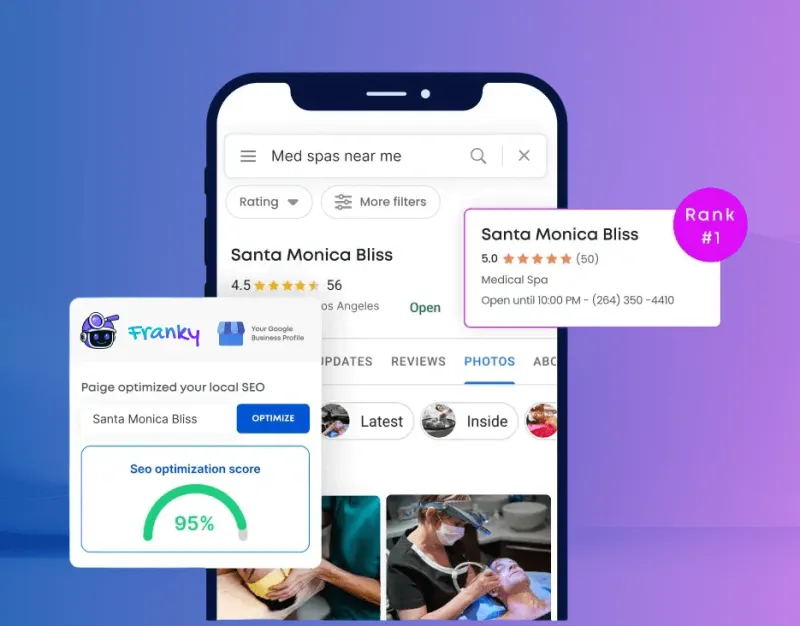
Franky positions itself as an AI-first GBP agent that automates routine tasks, learns from top-performing profiles, and runs set-and-forget workflows to reduce manual effort and improve local signals. Versus manual management - where teams must monitor reviews, craft posts, and upload images - Franky automates review replies, generates SEO-optimized posts, and highlights priority fixes from audits. Compared with generic GBP tools, Franky’s continuous learning and autonomous optimization aim to shorten the time from audit discovery to measurable ranking improvements. Run a short trial and compare baseline KPIs (views, calls, direction requests) to trial results to quantify the difference between manual, template-driven, and AI-driven approaches.
This comparison suggests AI-first agents can compress labor while maintaining or improving optimization consistency compared with manual and template-driven workflows.
What Are the Time-Saving and Automation Benefits of Using Franky?
An AI agent like Franky automates repetitive GBP tasks - review replies, post generation, and image suggestions - and typically reduces weekly manual effort for small businesses and agencies. Automated review triage removes the need for constant monitoring, scheduled posts replace weekly content planning, and automated audits prioritize the fixes that matter most. These automations free local teams to focus on high-value customer work while the agent handles scale tasks consistently. Agencies gain standardized workflows and faster onboarding for new locations. For teams that benchmark time savings, AI-driven workflows usually mean fewer staffed hours and faster turnarounds on optimization tasks.
How Does Franky’s AI-Driven Optimization Enhance Local Rankings and Lead Quality?

Franky’s AI-driven optimization improves local rankings by learning from high-performing profiles and recommending content, categories, and media that match those top signals. The agent produces SEO-focused posts, suggests images that lift CTR, monitors review sentiment to flag reputation risks, and uses heatmaps to target locations with the biggest upside. Expected KPI gains include more profile views, higher website clicks, increased direction requests, and better lead quality from clearer alignment between profile content and customer intent. Agencies can use trial outputs to quantify lift and plan scaled rollouts across portfolios.
How Can Small Businesses and Marketing Agencies Choose the Best GBP Software for Their Needs?
Pick GBP software using a decision framework that balances budget, scale, technical skill, and desired outcomes - focus on automation level, reporting detail, and onboarding support. Start by deciding whether you need single-location simplicity or multi-location bulk operations; then test vendors for automation (AI vs templates), role-based access, API integrations, and report frequency. Run a pilot that measures core KPIs (views, calls, website clicks, directions) over a short window to compare vendor impact. Consider fit: agencies usually need white-label reporting and client workflows, while SMBs prefer low-touch automation. The checklist below helps structure vendor interviews and pilot criteria.
- Scale Needs: Do you require bulk edits and per-location KPIs?
- Automation Level: Are AI recommendations and auto-replies essential?
- Reporting & APIs: Does the tool offer granular exports and API access?
- Onboarding & Support: Can the vendor onboard quickly with minimal IT work?
Use pilot results and the checklist to select the tool that best fits your operations and growth goals. Vendors such as BrightLocal, Semrush, Brandwatch, EmbedSocial, and dbaPlatform cover adjacent needs - compare their strengths in listings, reputation, analytics, and scale before deciding.
What Factors Should Multi-Location Businesses Consider When Selecting GBP Tools?
Multi-location organizations must prioritize scalability: bulk publishing, template management, role-based access control, and comparative reporting that highlights outliers across locations. Consider price per location, the ability to schedule campaigns at scale, and permissioning for local managers versus central admins. Reporting needs should include per-location KPIs, aggregated dashboards, and automated alerts for underperforming locations. Avoid tools that force manual work for every location; choose platforms with bulk workflows and centralized policy controls to reduce overhead and keep brand presence consistent across listings.
How Does Franky Meet the Unique Needs of Small Business Owners and Agencies?
Franky supports both low-touch small businesses and scaled agencies by combining prioritized audits, AI-generated posts, review reply automation, and heatmap insights. Small businesses get a set-and-forget workflow that keeps GBP active without daily attention; agencies can use consistent reporting and multi-location features to manage portfolios. During evaluation, agencies should check Franky’s reporting granularity and onboarding flow; small business owners should confirm automated replies and post suggestions stay on-brand. A short trial demonstrates time savings and early KPI improvements for both audiences.
Where Can You Access Free Google Business Profile Audit Tools and Trials to Evaluate GBP Software?
Several free audits and short trials let you benchmark GBP health and test vendor claims before committing. Audits typically return an optimization score, missing attributes, review trends, and local ranking heatmaps. Use an audit to build a prioritized action list: fix critical NAP inconsistencies first, then address missing attributes and image quality, and finally establish a review and post cadence informed by the audit. Trials validate time savings and KPI changes - capture baseline traffic, enable the tool, and compare results after the trial. Many vendors offer a free local ranking audit and a short trial window so you can inspect outputs and make an informed choice.
Audit outputs clarify where to invest effort and which tool features will deliver the best ROI across locations.
How Does Franky’s Free Local Ranking Audit Identify Optimization Opportunities?
Franky’s free local ranking audit produces an optimization score, lists missing or inconsistent attributes, summarizes review trends, and maps local ranking heatmaps to reveal neighborhood-level gaps. The audit delivers a prioritized action list that highlights high-impact fixes - like category corrections or missing services - that tend to drive faster ranking gains. Use the audit to build a 30-90 day roadmap that focuses on quick wins first, then sustained content cadence. The audit also provides the baseline data needed to measure trial results and quantify improvements in views and customer actions.
What Are the Steps to Start a Free Trial of Franky AI Marketing Assistant?
Starting a free trial of Franky is straightforward: request the free local ranking audit to establish baseline metrics and a prioritized action list, then sign up for the short trial and authorize access to the relevant GBP accounts. During the trial, monitor automated posts, review replies, and heatmap reports and compare KPIs to the audit baseline. At the end of the trial, evaluate time savings, KPI changes, and clarity of recommended actions to decide whether to adopt the platform for ongoing management.
- Request the free local ranking audit to collect baseline data and a prioritized action list.
- Start the short trial and authorize the platform to access the relevant GBP accounts.
- Review automated outputs (posts, replies, heatmaps) during the trial window.
- Compare KPI changes to the audit baseline and decide on next steps.
These steps create a low-friction evaluation path to validate whether an AI-driven GBP agent delivers the efficiency and ranking improvements you expect.
1. Start with an audit: identify gaps before testing tools.
2. Run a short trial: validate automation and KPI changes. 3. Compare outcomes: evaluate time saved and ranking or lead improvements.
These practical steps let you pilot GBP software responsibly, minimize risk, and prove value through data-driven comparison.
For a 3-day free trial, visit https://rankoneseo.io/. To claim a free local ranking audit, go to https://rankoneseo.io/free-gbp-audit-tool.
Frequently Asked Questions
What are the benefits of using Google Business Profile comparison tools for small businesses?
Comparison tools save time and improve local visibility by automating audits, review monitoring, and content scheduling. They free business owners from daily maintenance, surface competitive gaps, and highlight high-impact fixes. The result is a stronger online presence that drives more foot traffic, calls, and conversions without adding overhead.
How can I measure the effectiveness of my Google Business Profile management efforts?
Track core KPIs: profile views, search and discovery impressions, website clicks, calls, and direction requests. Use local ranking heatmaps to see performance by neighborhood. Compare these metrics before and after changes or trials to measure impact and iterate on what works.
What common mistakes should businesses avoid when managing their Google Business Profile?
Common errors include leaving information out of date, ignoring reviews, and using inconsistent NAP (Name, Address, Phone) details. Skipping Google Posts and photos also reduces engagement. Regular audits, prompt review replies, and consistent NAP data prevent these pitfalls and protect visibility.
How often should I update my Google Business Profile?
Make updates regularly - weekly or bi-weekly is a good rhythm for posts, review responses, and adding images. Immediate changes are required for hours, services, or promotions. Consistency signals activity to Google and builds customer trust.
Can Google Business Profile comparison tools help with multi-location management?
Yes. These tools offer bulk editing, role-based access, and comparative reporting to manage multiple listings efficiently. They centralize tasks so agencies and multi-location brands maintain consistency while monitoring performance across locations.
What role does customer engagement play in Google Business Profile optimization?
Customer engagement - responding to reviews, answering questions, and posting updates - boosts trust and can improve local rankings. Active engagement typically increases review volume and ratings, both important signals for prominence and conversion.
Conclusion
Google Business Profile comparison tools accelerate local SEO by automating routine tasks and delivering actionable insights about listings and competitors. They save time, improve consistency, and help convert visibility into measurable customer actions. Prioritize the features that match your scale and goals, run a short audit-driven pilot, and choose the platform that proves ROI in real KPIs. Start testing today to strengthen your local presence and drive more conversions.
About the Author
Thomas Hassett
Thomas Hassett is the Co-founder of RankONE, a local SEO technology company on a mission to help businesses get found online through Google Business Profile optimization and AI-powered marketing tools. Since launching RankONE, Thomas has helped businesses across industries grow through data-driven local search strategies and automated lead generation systems.
Before co-founding RankONE, Thomas held operations and strategy roles at technology companies, where he developed expertise in scaling client-facing systems and optimizing business processes. His background in systematic problem-solving and performance optimization now drives the methodology behind RankONE's marketing solutions.
Thomas's career has focused on marketing automation, conversion optimization, and local search strategies. His deep knowledge of Google Business Profile management, combined with real-world experience scaling operations, positions him as a trusted voice in the local SEO space.
Under his leadership, RankONE has become a go-to solution for businesses seeking to dominate local search rankings through AI automation and performance-focused strategy. The company's tools, including ConversionONE, help businesses streamline their marketing and convert more leads into customers.
Thomas continues to build and refine tools with one mission in mind: to help businesses get found online by their perfect customer.




Solutions
Services
Helpful Links
Copyright 2025. RankONE by ES Studios | Terms of Use | All Rights Reserved.